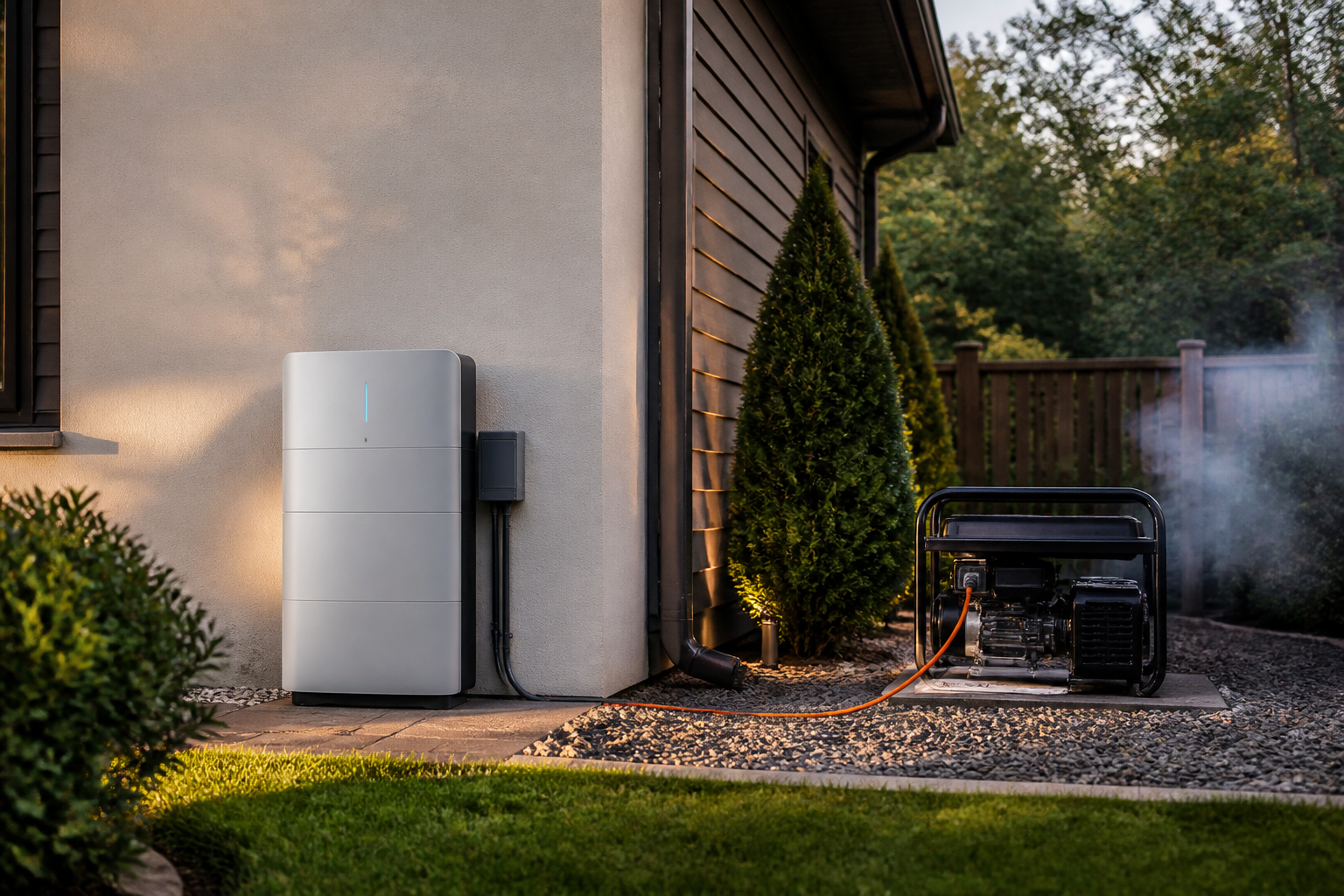
The Mini ESS vs generator choice is not a simple contest. Start with the loads that must remain available, then match their operating pattern to a practical source of energy. The right answer may change between a short evening outage and an extended event.
Step 01
Define the loads and outage pattern first
Write down every load that matters during an outage. Record its running watts, likely starting demand, planned hours, and whether it must run beside other devices. Separate essential loads from convenient ones. A few lights, a router, a phone, and a laptop create a different brief from refrigeration or workshop equipment.
Next, describe the event. Is the system covering brief interruptions, a repeated daily gap, overnight use, or a rare extended outage? Do not borrow outage figures from another country or neighborhood. Your own operating record is the useful input.
Output power and stored energy answer different questions. Output limits which loads can run together, while capacity helps define how long a stated load may be supported. Motor-driven equipment can also have starting behavior that needs review. Use the exact device label where possible and mark missing values for confirmation.
A Mini ESS is usually easier to match to a small, stable group of essential loads. An engine-driven generator may be more practical when high loads must run for a long period and fuel is reliably available. Neither label replaces sizing. Use the YDPOWER model comparison only after the load list is clear.
Think about the people using the system, too. A remote-work setup may value quiet continuity for connectivity and computers. The home learning and remote-work power plan shows how that use case is organized after the technology route has been narrowed.
- List essential devices and their nameplate watts.
- Mark loads that overlap and loads with starting demand.
- Record your typical outage duration.
- Record the available charging, fuel, placement, and service options.
Step 02
Compare fuel and charging workflows
A generator produces electricity while its engine runs and fuel is supplied. A Mini ESS stores electricity in advance, then provides inverter output when needed. YDPOWER Mini ESS supports photovoltaic and AC charging, so plan where and when the battery will be recharged.
Charging access matters as much as battery size. A solar input is useful only when panel voltage, input power, wiring, and sunlight conditions fit the selected model and site. AC charging also depends on the exact input range and available supply. Confirm those fields against the chosen SKU instead of applying one series-wide assumption.
A Series delivers inverter efficiency above 86% and mains charging efficiency above 95%. These ratings apply to the respective conversion paths. Actual runtime and operating cost also depend on loads, cables, temperature, charging conditions and the selected model.
Selected A Series models have a UPS bypass transfer time below 50 milliseconds. Whether a computer, router or other device stays on during transfer depends on its power-supply hold-up time, the connected load and the wiring arrangement. Check the exact model and validate the intended equipment setup before use.
| Decision factor | Mini ESS workflow | Generator workflow | Question to answer |
|---|---|---|---|
| Energy supply | Stored energy replenished through compatible PV or AC inputs | Fuel supplied to an engine during operation | Which source is reliably available before and during the outage? |
| Load pattern | Well suited to a defined group of essential loads | Useful for extended operation when the selected unit can support the load | What runs together, and for how long? |
| Daily routine | Check state of charge, inputs, cables, and connected load | Check fuel, oil, ventilation, cables, and service status | Who performs each check, and where is it recorded? |
| Placement | Place according to model instructions and environmental limits | Operate a portable generator outdoors, away from doors, windows and vents | Can the site meet clearance, access, weather, and cable requirements? |
| Mixed system | Can serve quiet priority loads and accept approved charging inputs | Can cover longer or heavier events within its rating | What is the handoff rule between sources? |
Step 03
Compare noise, placement, and maintenance
Operating noise matters near study, sleep, customer-service and communication spaces. Eleven YDPOWER models have operating noise below 50 dB. Check the selected model rating and consider the load and placement environment when planning its use.
A Mini ESS does not burn fuel while discharging, so it produces no direct combustion exhaust during use. It still needs a suitable environment, stable placement, correct cables, and access for inspection. Portable does not mean that any indoor corner is suitable. Follow the instructions and environmental limits for the exact model.
A generator has a different site plan because an engine, fuel, heat, noise, and exhaust are part of its operation. Operate a portable generator outdoors, away from doors, windows and vents; never use it inside a home or garage. Follow the generator instructions and route power safely to the loads. Local instructions and qualified electrical advice take priority over a generic comparison article.
Maintenance is also different rather than absent. Generator users manage engine service, fuel condition, and mechanical checks. Mini ESS users inspect connectors, enclosure condition, charging inputs, protection indications, and storage state. The better choice is often the system the household or local service team can maintain consistently.
A small shop adds customer access, cable traffic, and operating-hour constraints to this review. Use the small-shop backup planning route after deciding which workflow fits the site; review customer access, appliance loads and the operating schedule for that site.
Step 04
Combine solar and a generator where appropriate
Some operating patterns need two sources. A Mini ESS can keep selected quiet loads available during short gaps, while a generator can be reserved for an extended high-load event. This approach can reduce unnecessary engine operation without pretending the generator has no useful role.
Solar can add another charging route when the array and Mini ESS input are correctly matched. It is not an unlimited source. Panel voltage, maximum input, weather, available charging time, battery state, and evening demand all shape the result. The Southeast Asia solar household storage guide explains the site questions for that regional context without assuming every country is the same.
Write a handoff sequence before an outage. State which loads remain on storage, when the generator may start, who checks each source, and how charging is monitored. Keep high-load devices off the priority circuit unless the design explicitly includes them. A clear sequence is easier to train and audit than an improvised response.
Do not assume a generator can connect directly to any Mini ESS. Confirm the allowed AC input, waveform, transfer arrangement, grounding, protection, and local electrical requirements. A qualified installer should review the final wiring. The generator-alternative solution page is the next step for a selected household scenario; confirm the charging and transfer arrangement for the equipment being considered.
- Assign quiet, high-priority loads to the storage plan.
- Define the event that justifies generator operation.
- Confirm how PV, mains, or approved generator input may replenish storage.
- Document switching, shutdown, inspection, and service responsibilities.
Step 05
Compare operating costs using local data
Compare cost categories, not a universal result. A generator has equipment, fuel, service, and operating logistics. A Mini ESS has equipment, charging energy, installation or placement work, and long-term inspection needs. A mixed system includes parts of both structures.
Local tariffs, fuel prices, taxes, transport, service access, load hours, and replacement policies can change the outcome. Gather current tariffs, fuel prices and service quotes for the intended site before estimating operating cost.
Build a worksheet with one row for each input and identify its source. Use supplier quotations for equipment, local records for energy and fuel, and a written service scope for maintenance. Mark uncertain fields as pending. Revisit the worksheet when the load pattern or operating schedule changes.
Finish with a conditional decision. Choose Mini ESS for a defined set of quiet essential loads when charging access is dependable. Choose a generator when an extended high-load event and fuel workflow make it practical. Combine them when one source alone cannot cover the full pattern safely and consistently.
For scenario planning across household routines, start at the home backup solutions hub. For more methods that help you prepare a clear brief, return to the household power learning center or the YDPOWER home page.