
Wholesale, OEM, and ODM solve different buyer problems. Wholesale starts with an existing product range. OEM adds branding to an existing product while keeping its materials and structure unchanged. ODM begins with a market need that may require product planning and design work. The right choice depends on how much of the product is already defined, who will approve changes, and which evidence must be ready before launch.
For a logo or packaging change, start with a private-label enquiry. For changes to the enclosure, electrical design or product format, describe the engineering work you need. Ask for tooling costs, minimum quantities, sample arrangements and lead time in the quotation.
Choose the starting point
Compare wholesale, OEM and ODM
Wholesale suits distributors who want to sell an established product range. Compare model specifications, select a product mix, and plan sales, logistics, training and service. Product configuration and supporting documents are tied to the selected model. Confirm commercial terms for the actual order.
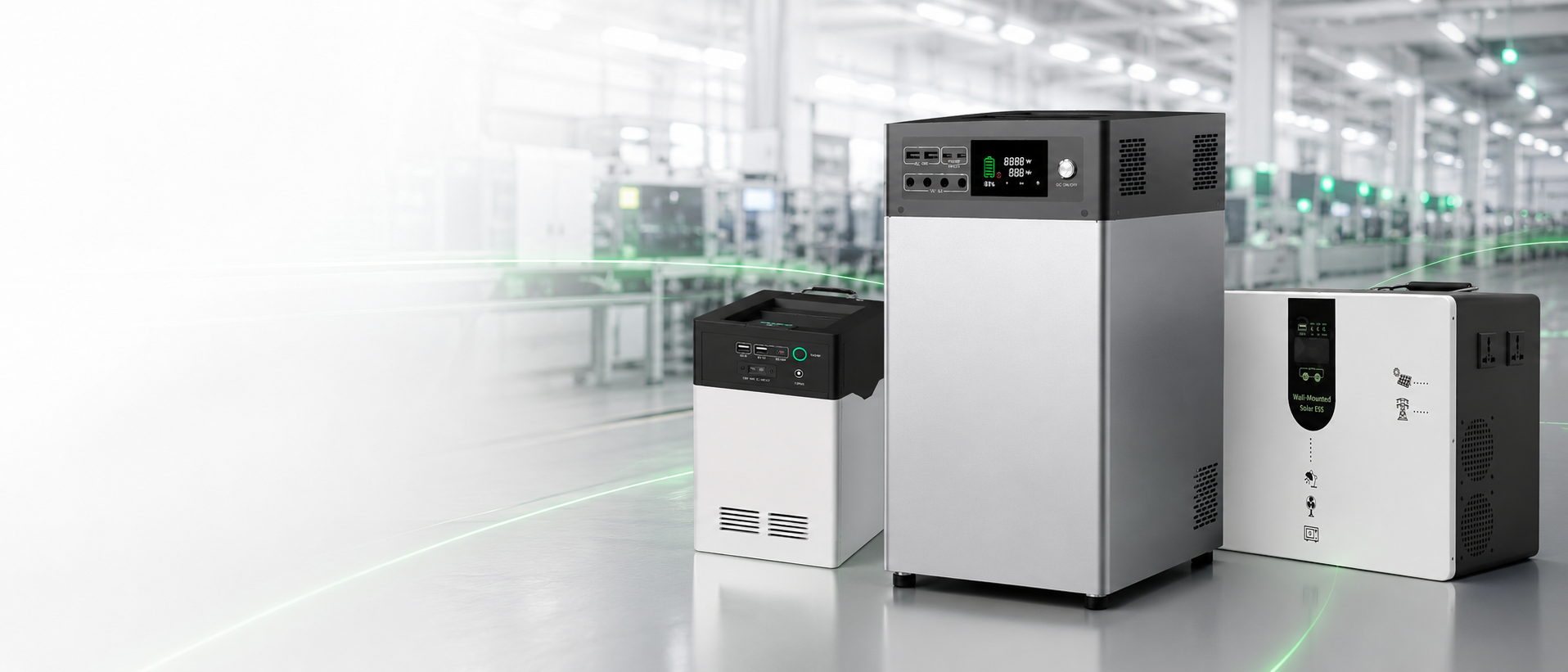
OEM suits a buyer who wants their brand on an existing Mini ESS. Body color, graphics, logo, text markings and accessories can be customized, while product materials and structure remain unchanged. Packaging artwork, labels and manuals can also be customized. Interface, capacity or output changes belong in an ODM review within the limits of the cells and BMS.
ODM starts earlier in the decision chain. The buyer supplies a market and load brief, while the product route may require joint planning or design. This path creates more approval points. It can affect enclosure choices, capacity and output targets, interfaces, sourcing, validation, documents, and the production handoff.
| Wholesale | OEM | ODM |
|---|---|---|
| Who defines the product: buyer selects from the existing range. | Who defines the product: the existing route is adapted to an agreed buyer brief. | Who defines the product: buyer and supplier develop the route from the market brief. |
| Design role: use current product and document definitions. | Design role: customize branding, accessories and packaging; retain product materials and structure. | Design role: product planning and design may be part of the project. |
| Minimum order: confirm current wholesale terms for the chosen model mix. | Custom minimum order: confirmed per project after scope review. | Custom minimum order: confirmed per project after feasibility review. |
| Timing: standard-model production takes 4 weeks; shipping time is separate. | Sample and lead time: OEM sample production takes 3 weeks; confirm bulk-production scheduling in the quotation. | Sample and lead time: confirmed per project; design and validation affect the plan. |
| Good fit: a channel testing or expanding demand with an existing product. | Good fit: a brand with a clear market position and defined customization needs. | Good fit: a team with a differentiated requirement and a complete decision process. |
These terms follow the current YDPOWER cooperation guide. At the agreed MOQ, body color, graphics, logo and text marking customization carries no additional charge; added accessories are charged at cost. Packaging and manual customization costs are agreed according to quantity. New electrical requirements need an ODM review. Start with the broader YDPOWER OEM and ODM capability map, then confirm the route against the exact brief.
Set the workstreams
Define what can be customized
Customization is not one switch. Break it into product, brand, user, manufacturing, and supply-chain workstreams. A private-label Mini ESS brief may cover brand assets, color direction, labels, cartons, manuals, and market-facing information. The team should identify who supplies each file and who gives final approval.
Electrical requirements need a separate review. Use the capacity and power planning process to describe household loads, expected output, storage needs, charging access, and placement. Do not select a battery size from price positioning alone. The requirement must stay connected to what the end user needs to operate.
Appearance, connectors, and packaging also have linked consequences. The appearance, interface, and packaging workstream helps buyers record enclosure preferences, outlet priorities, labeling, carton information, and manual needs. An interface change may affect instructions and service training. A packaging change may affect artwork approval and shipment preparation.
Manufacturing and supply questions should remain visible from the start. Buyers can review manufacturing and delivery coordination as a responsibility map, then use the cell and circuit supply-chain review for technical sourcing questions. Include the requested tests, sample review and delivery responsibilities in your inquiry.
For energy storage above 5kWh, or another new-energy product not in the current range, YDPOWER can discuss product design and sourcing-agent support. The new-energy sourcing route can also cover product planning and parts sourcing. Scope, fees, tooling, samples, custom minimums, and timing are confirmed per project.
Prepare your inquiry
Prepare a market and load brief
A useful brief begins with the target market and buyer. State whether the product is planned for a national distributor, solar dealer, appliance retailer, installer, online reseller, or another channel. Describe the daily problem the product should solve. Include your target market, expected order quantity and customer requirements.
Next, list the loads. Record appliance nameplate power where available, which loads must run together, and the intended charging sources. Note whether the home has reliable AC charging, planned solar input, or both. Mark missing values as open questions. This is more useful than requesting a broad “custom home battery” with no operating context.
Add product-positioning decisions in plain language. Describe the preferred form, interface priorities, channel price position, service expectations, packaging languages, and required handoff files. Separate requirements from preferences. That distinction gives engineers room to propose a feasible route without losing the buyer’s non-negotiable needs.
Request separate written terms for tooling cost, custom MOQ, samples and lead time once the technical scope is agreed. The same rule applies to delivery milestones. A requested date is an input, not an approved production promise.
Control revisions before scale
Confirm samples, documents and ownership
Validation needs an agreed checklist. Identify the sample quantity, configuration, enclosure revision, interfaces, label artwork, packaging, manuals, and document pack that require review. The exact sample policy is confirmed per project. Each item should have an owner, a version, an approval status, and a record of open questions.
Tie technical evidence to the exact product identity and intended market. A report for one model or component should not be assumed to cover a changed configuration. Ask which files will be available for the sample stage and which are prepared later. Record country-specific document needs as requirements for review, not as completed claims.
Ownership is broader than intellectual property language in a contract. The working team should know who supplies logos, translations, label text, drawings, and packaging files. It should also know who can approve a revision. Define how editable files are transferred, where final versions are stored, and how an obsolete file is removed from circulation.
Use a simple responsibility matrix with four states: buyer supplies, supplier supplies, jointly reviewed, and open for confirmation. Apply it to product brief, artwork, manuals, drawings, samples, documents, inspection criteria, and shipment files. This makes a late change visible before it reaches production.
Do not release the project because one sample looks acceptable. Confirm that the approved unit, drawings, product identity, packaging, and instructions describe the same revision. If a change affects output, capacity, interfaces, enclosure, or sourcing, reopen the related validation questions before approving the next gate.
Approve the production brief
Move from validation to production
Production readiness is a decision gate. The handoff should include the approved product brief, load assumptions, drawings, configuration, interface list, label artwork, carton files, user instructions, document plan, quality checks, and escalation contacts. Manufacturing and the buyer’s channel team should work from the same revision.
Plan the schedule according to the order type. Standard-model production takes 4 weeks and OEM sample production takes 3 weeks. ODM samples, mass-production timing and pricing are negotiated for the agreed development scope. Confirm approval milestones, OEM bulk-production scheduling and shipping time separately.
Before shipment, check that the physical product, label, manual, carton, and commercial item name remain aligned. Confirm the required shipping files and the responsible party for each one. The distribution partner pathway can help connect product decisions with channel training, first-line service, and market launch responsibilities.
Keep a feedback loop after the first shipment. Dealers may identify unclear packaging, a missing instruction, an interface preference, or a mismatch between the planned buyer and the selected product. Record the issue, its evidence, and the next owner. Do not change production specifications through informal messages.
The rule is simple: choose wholesale when the existing range fits, OEM when a defined brand layer needs controlled adaptation, and ODM when the market need requires joint product work. Then confirm project-specific cost, custom MOQ, samples, and timing in the approved quotation and project brief.